
A fireplace can either anchor a room beautifully or make the whole space feel stuck in another decade. If your brick surround looks too dark, too orange, too shiny, or simply too heavy, a limewash fireplace can soften it without hiding all the natural character underneath.
That’s why homeowners love this finish. It doesn’t create the flat, sealed look of regular paint. Instead, it settles into brick, mortar, and stone with a soft, chalky, aged appearance that feels relaxed but still refined.
You may be comparing it with a whitewash brick fireplace, wondering whether a limewash brick fireplace is better, or trying to understand the difference between limewash vs whitewash brick fireplace finishes before you touch your own hearth.
This guide walks you through how limewash works, where it looks best, how to choose colors, what mistakes to avoid, and when hiring a local fireplace refinishing pro is worth it.
What Makes a Limewash Fireplace Different?
A limewash finish is made from slaked lime, water, and sometimes mineral pigments. When applied to porous masonry, it bonds into the surface instead of sitting on top like regular latex paint.
That is the biggest reason a limewash fireplace looks different from a painted fireplace. Paint usually creates a more solid coating. Limewash creates a softer, mineral-like finish with natural movement, variation, and depth.
A good limewashed surface still lets brick texture show through. You can keep some red, brown, gray, tan, or charcoal tones visible, depending on how much product you apply and how much you distress afterward.
Why the Finish Feels Softer Than Paint
Limewash has a matte, chalky look. It catches light gently instead of reflecting it. This is especially helpful in living rooms where a dark brick surround pulls attention away from the furniture, flooring, or mantel.
A lime wash fireplace can make the room feel brighter without making the fireplace look brand-new. That slightly imperfect quality is part of the charm.
If you like old European cottages, farmhouse interiors, historic homes, or organic modern rooms, limewash often feels more natural than solid white paint.
Where Limewash Works Best
Limewash works best on porous surfaces such as unsealed brick, natural stone, some mortar, and other absorbent masonry. It may not bond properly to sealed, glossy, painted, or nonporous surfaces unless the surface is prepared correctly.
A stone fireplace can take limewash beautifully when the stone is absorbent enough. The result often feels softer and more balanced, especially when the original stone is too yellow, too busy, or too dark for the room.
The same idea applies to fireplace stone with strong color variation. Limewash can tone it down while still letting natural texture peek through.
Why a Limewash Fireplace Is Popular in Modern Homes
A limewash fireplace gives homeowners a middle ground between “leave the old brick alone” and “paint everything solid white.” That middle ground matters because many people want a fresher living room without erasing the character of the original masonry.
In older homes, brick can feel charming but visually heavy. In newer homes, builder-grade brick or manufactured stone can look too patterned. Limewash helps both situations by calming the surface.
It Keeps Texture Visible
The best part of a limewash fireplace is that it doesn’t flatten the wall. Brick edges, mortar joints, chips, grooves, and surface texture still show.
This is why many designers prefer limewash when a fireplace has good shape but poor color. You can change the tone without losing the handmade or aged feel.
A limewash brick fireplace can be especially effective when the brick has too much red or orange. The limewash cools it down and makes it easier to pair with modern furniture, neutral rugs, and updated wall colors.
It Brightens Without Looking Too Perfect
Some fireplace updates look too crisp for a cozy room. Limewash avoids that problem because the finish naturally has movement.
A whitewash brick fireplace can also brighten brick, but it usually uses diluted paint or a paint-like mixture. That can look beautiful, yet it often gives a different finish than mineral limewash.
If your goal is soft, old-world, breathable, and textured, a lime wash fireplace is usually the better style direction.
It Can Suit Many Interior Styles
Limewash isn’t limited to farmhouse rooms. It also works with:
- Organic modern interiors
- Transitional living rooms
- Cottage-style homes
- Rustic cabins
- Coastal spaces
- Traditional homes with updated furnishings
- Minimalist rooms that need texture
The finish depends heavily on color and application. A warm ivory reads classic. A gray-beige finish feels modern. A heavily distressed application feels rustic. A nearly opaque coat feels cleaner and more updated.
Limewash vs Whitewash Brick Fireplace: What’s the Real Difference?
The phrase limewash vs whitewash brick fireplace matters because many homeowners use the terms interchangeably, but they’re not always the same thing.
Whitewashing usually means thinning paint with water and brushing it over brick so some original color shows through. Limewashing uses lime-based mineral wash that bonds differently and ages differently.
Both can look good. The right choice depends on your surface, style, budget, and how permanent you want the finish to feel.
Whitewash Brick Fireplace Finish
A whitewash brick fireplace is often created with watered-down latex paint. The mixture is brushed on and wiped back to reveal some of the original brick.
This method is popular because it’s inexpensive, easy to understand, and available with common paint supplies. You can adjust the opacity by changing the paint-to-water ratio or wiping more aggressively.
The downside is that paint can seal the brick more than limewash. It may also look less natural if applied too evenly or too thickly.
Limewash Brick Fireplace Finish
A limewash brick fireplace has a more mineral, chalky, aged surface. Instead of looking like thin paint, it can look like the brick has naturally weathered over time.
Limewash is often more forgiving visually because the finish is supposed to have variation. It can be applied thick, thin, patchy, or distressed depending on the look you want.
For homeowners who want a European, cottage, or historic feeling, a lime wash fireplace often gives a more authentic result.
Which One Lasts Longer?
Durability depends on the surface, preparation, product, and environment. On absorbent brick or stone, limewash can bond well and age gracefully. On a poorly prepared surface, it may rub off or look uneven in the wrong way.
A whitewash brick fireplace made with paint may resist casual touching better at first, but it can be harder to remove or soften later. Limewash can often be adjusted during application and may be easier to distress for a natural effect.
When comparing limewash vs whitewash brick fireplace options, think less about which is “best” and more about which finish matches the way you want the fireplace to age.
Best Brick and Stone Surfaces for Limewash
Not every fireplace surface behaves the same. Brick, fieldstone, limestone, manufactured stone, river rock, and concrete all absorb finishes differently.
Before starting a limewash fireplace project, test a small hidden area. The test patch tells you more than any product description can.
Brick Fireplaces
Brick is the most common surface for limewash. Older brick often absorbs beautifully because it tends to be porous and textured.
A limewash brick fireplace can tone down red, orange, brown, or multicolored brick while keeping the natural pattern visible. You can apply one coat for a translucent look or build up coverage for a softer white finish.
A whitewash brick fireplace may work well too, especially if you want a faster, paint-based DIY option. The main difference is the final feel: whitewash often looks cleaner, while limewash often looks more aged.
Stone Fireplaces
A stone fireplace can be trickier because stone varies so much. Some stone absorbs quickly. Some resists the finish. Some has strong color movement that still shows after multiple coats.
Limewash can work beautifully on a stone fireplace when the goal is to calm a busy surface. It can soften yellow, brown, pink, or gray tones and help the fireplace blend with updated flooring, walls, or furniture.
The best results usually come from patience. Since fireplace stone has uneven shapes and crevices, you need to brush carefully and step back often.
Manufactured Fireplace Stone
Manufactured fireplace stone may or may not accept limewash well. Some products are porous, while others have sealers or surface coatings.
If the stone has a shiny finish, limewash may not bond properly. You may need cleaning, light abrasion, primer alternatives, or a different product made for coated surfaces.
For a manufactured stone fireplace, testing matters even more. A small sample area can prevent a costly mistake across the whole surround.
Mortar Lines
Mortar absorbs differently from brick or stone. Sometimes it becomes lighter faster than the main surface. Other times it stays darker and creates contrast.
That contrast can be beautiful. On a limewash brick fireplace, lighter mortar can create an aged cottage look. On a cleaner modern design, you may want more even coverage.
How to Choose the Right Limewash Color
Color choice can make or break the whole project. Many people assume limewash means bright white, but softer shades usually look more natural.
A limewash fireplace should connect with the room’s existing colors: walls, flooring, mantel, sofa, rug, metal finishes, and natural light.
Warm White
Warm white is the safest choice for many homes. It softens brick without turning the fireplace stark or cold.
This shade works well with beige walls, oak floors, brass hardware, cream upholstery, and warm wood mantels. It’s especially useful when the original brick is orange or brown.
A warm white lime wash fireplace feels cozy rather than sterile.
Soft Gray
Gray limewash can look beautiful in rooms with cooler flooring, black accents, marble, or modern furniture. It can also tone down red brick without creating a bright white focal point.
Be careful with gray in north-facing rooms. It may look colder than expected, especially in winter light.
For a stone fireplace, a gray-beige limewash can help blend mixed stones without making the surround look painted.
Greige and Taupe
Greige and taupe are excellent when you want a subtle update. They soften color variation without making the fireplace the brightest object in the room.
These shades suit transitional homes, organic modern spaces, and rooms with natural textures. They’re also forgiving around ash, dust, and everyday fireplace use.
A greige limewash brick fireplace can look expensive because it feels quiet and layered.
Off-White with Distressing
Distressing means removing or thinning some of the finish after application so original brick or stone shows through. This can be done with a damp rag, spray bottle, brush, or sponge depending on the product and timing.
A distressed limewash fireplace works well when you want charm and texture. It’s less ideal if you prefer a clean, uniform look.
How to Prep a Limewash Fireplace Before Applying Product
Preparation may not be the fun part, but it decides whether the finish looks intentional or messy. A fireplace collects dust, soot, ash, oils, old cleaners, and sometimes waxy residue.
Before applying a limewash fireplace finish, clean the surface thoroughly and give it time to dry.
Clean the Masonry
Use a stiff brush, vacuum, and mild cleaner suitable for masonry. Avoid leaving soap residue behind because it can interfere with bonding.
If there is heavy soot, use a fireplace-safe cleaner and rinse carefully. Soot can bleed through light finishes if not handled properly.
For a whitewash brick fireplace, cleaning matters too. Paint-based whitewash may hide more at first, but dirt and soot can still affect the final color.
Check for Sealers
Splash a small amount of water on the brick or stone. If the water absorbs, the surface is likely porous. If it beads up, there may be a sealer.
A sealed stone fireplace may need extra prep before limewash. The same applies to sealed brick or glossy masonry.
If water cannot enter the surface, limewash may sit on top rather than bonding well.
Protect Surrounding Areas
Cover the mantel, hearth, floor, nearby walls, and firebox opening. Limewash is watery and can drip.
Use painter’s tape, drop cloths, plastic sheeting, and old towels. Keep a bucket of clean water nearby for quick cleanup.
A lime wash fireplace project is not difficult, but it can get messy if you rush.
Test Before Committing
Apply a small test patch in a low-visibility spot. Let it dry fully because limewash often dries lighter than it looks when wet.
This step helps you judge opacity, color, absorption, and distressing time. It’s especially important with fireplace stone, where each stone may react differently.
DIY Limewash Fireplace Steps
A DIY limewash fireplace is possible for careful homeowners, especially on simple brick surrounds. The key is working slowly and accepting that the finish should not look perfectly uniform.
Read your product instructions first because formulas vary. Some limewash products need dilution. Others come ready to use.
Basic Tools You’ll Need
Most projects require simple supplies:
- Masonry cleaner
- Stiff brush
- Vacuum
- Painter’s tape
- Drop cloths
- Spray bottle
- Limewash product
- Masonry brush
- Bucket
- Sponge or rags
- Gloves and eye protection
For a rough stone fireplace, use a brush that can reach deep joints and uneven texture.
Application Process
Start by lightly dampening the surface. Limewash often spreads better on damp masonry because it slows absorption and gives you more working time.
Brush the product into the brick, mortar, or stone. Work in manageable sections so you can adjust coverage before it dries too much.
For a limewash brick fireplace, many homeowners apply product generously, wait a short period, then distress selected areas with water and a rag. This brings back hints of the original brick.
How Much Coverage Should You Use?
Coverage depends on your style. A translucent finish leaves more brick showing. A heavier finish creates a softer, whiter surface.
If you’re unsure, start lighter. You can usually add more. Removing too much after the product cures can be harder.
A whitewash brick fireplace often gives more immediate control because you wipe paint back as you go, while limewash may continue changing as it dries.
Common DIY Mistakes
Avoid these mistakes:
- Skipping the cleaning step
- Applying to sealed masonry without testing
- Choosing bright white too quickly
- Forgetting that wet limewash dries lighter
- Covering all texture too evenly
- Not protecting floors and mantels
- Rushing distressing before understanding dry time
A natural-looking limewash fireplace usually comes from layering and stepping back often, not from forcing perfection.
Limewash Fireplace Design Ideas for Different Homes
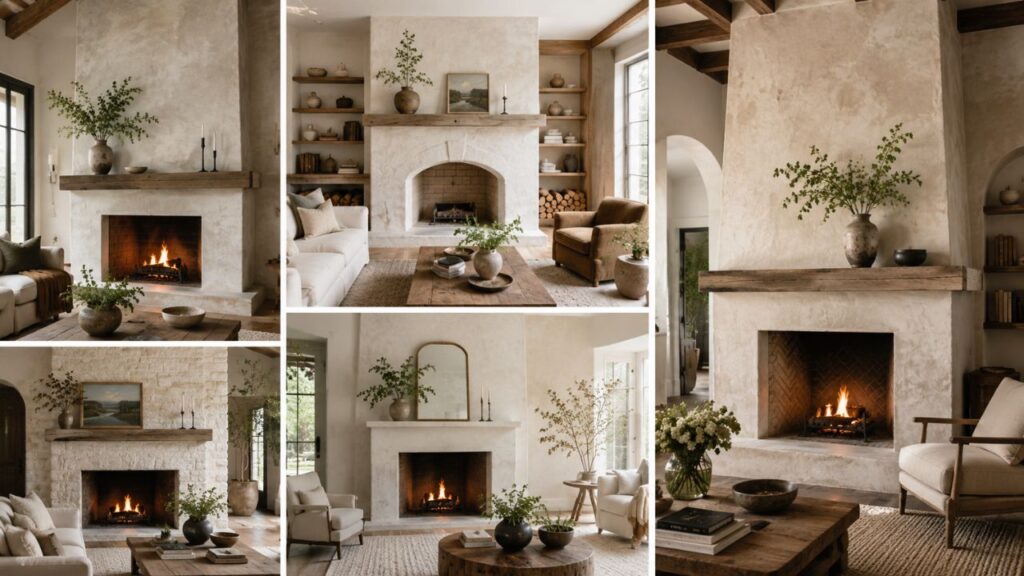
The same finish can look rustic, modern, coastal, or traditional depending on how you style the rest of the room. The fireplace doesn’t stand alone. It talks to the mantel, hearth, furniture, flooring, and wall color.
Modern Organic Living Room
Use a warm white or greige limewash with a simple wood mantel. Add linen upholstery, textured rugs, black accents, and natural ceramics.
This look works especially well with a stone fireplace that feels too busy. The limewash calms the stone so the room feels peaceful instead of visually crowded.
A softly finished fireplace stone surround can make modern furniture feel warmer.
Farmhouse or Cottage Style
For farmhouse and cottage rooms, choose a more distressed finish. Let some original brick or stone show through near edges, corners, and high points.
A limewash brick fireplace with a reclaimed wood mantel, woven baskets, vintage art, and soft white walls can feel collected rather than staged.
This is also where a lime wash fireplace finish looks most authentic. Slight irregularity adds character.
Traditional Living Room
A traditional room may need more restraint. Choose a balanced off-white or taupe and avoid heavy distressing.
Pair the finish with a classic mantel, brass fireplace tools, framed art, and tailored furniture. The goal is elegance, not rustic drama.
If you’re debating limewash vs whitewash brick fireplace options for a traditional home, limewash often gives more depth while whitewash can look cleaner and simpler.
Coastal Fireplace Update
Coastal rooms look best with soft whites, sandy beige, pale gray, and driftwood tones. Avoid harsh bright white unless the room already has crisp coastal contrast.
A whitewash brick fireplace can work in coastal spaces, but limewash often feels more weathered and natural. On rough fireplace stone, a pale wash can create a sun-faded look.
Cost, Timing, and Hiring a Local Pro
The cost of a limewash fireplace project depends on size, surface condition, product choice, and whether you do it yourself or hire a professional.
A small DIY brick fireplace may only require cleaner, supplies, and one container of limewash. A large stone fireplace with heavy texture, soot staining, or sealer issues may cost more because prep takes longer.
DIY Cost Range
For a basic DIY project, expect to spend money on cleaning supplies, tape, drop cloths, brushes, protective gear, and limewash. If you already own some tools, the cost stays lower.
DIY makes sense when the fireplace is accessible, unsealed, and not heavily damaged. It also helps if you’re comfortable with imperfect finishes.
A DIY lime wash fireplace can usually be completed over a weekend, including prep and drying time.
Professional Cost Factors
A local fireplace refinishing pro may charge based on labor, travel, surface size, repairs, material, and finish complexity.
Expect higher pricing if the fireplace has:
- Tall ceilings
- Heavy soot staining
- Sealed brick or stone
- Damaged mortar
- Deep joints or rough texture
- Multiple colors of stone
- Built-ins or trim that need careful protection
A professional can also help you choose between a whitewash brick fireplace, a limewash finish, or a masonry-safe paint depending on your goals.
How Long the Project Takes
A simple brick fireplace may take one day of active work, though drying and curing can take longer. More complex stone surfaces may require additional prep, testing, and touch-ups.
For a local project, ask whether the quote includes cleaning, masking, application, distressing, touch-ups, and cleanup. A trustworthy pro should explain the process clearly before starting.
Frequently Asked Questions
How much does a limewash fireplace near me usually cost?
A limewash fireplace near you can vary widely depending on fireplace size, brick or stone condition, and local labor rates. A simple DIY project may cost much less than professional refinishing, while a tall or heavily textured fireplace can cost more. The most accurate estimate comes from an in-person look at the surface, soot level, and surrounding trim.
Is limewash safe for an indoor fireplace?
Limewash is commonly used on indoor masonry surfaces, but you should keep it on the exterior surround, not inside the active firebox unless a product specifically says it is safe for that use. Always follow the manufacturer’s instructions and avoid applying decorative finishes where direct flame or extreme heat occurs. If you use your fireplace often, ask a local pro about heat-safe boundaries.
How long does a limewash brick fireplace take to finish?
A limewash brick fireplace often takes a weekend for DIY homeowners when cleaning, masking, application, distressing, and drying are included. The active brushing may only take a few hours, but prep and drying time matter. A professional may finish faster, especially if the surface is straightforward.
What is better: limewash vs whitewash brick fireplace?
The best choice depends on the look you want. Limewash vs whitewash brick fireplace decisions usually come down to finish: limewash looks chalkier, softer, and more mineral-based, while whitewash often looks cleaner and more paint-like. If you want aged texture, choose limewash; if you want quick, controlled coverage, whitewash may suit you better.
Can you limewash a stone fireplace?
Yes, you can limewash a stone fireplace if the stone is porous enough to absorb the finish. Some fireplace stone has sealers or coatings that prevent proper bonding, so testing is important. Rough natural stone usually needs careful brushing because the surface has deep joints and uneven edges.
Will limewash cover dark red brick completely?
It can soften dark red brick, but full coverage may require multiple coats or a heavier application. Many homeowners prefer leaving small hints of red showing because it creates depth and character. If you want a perfectly solid white result, masonry paint may be a better fit than limewash.
Can I remove limewash if I don’t like it?
Limewash can often be distressed or reduced during application with water, especially before it fully cures. Once it has bonded and cured, removal may be more difficult and may require scrubbing or specialty methods. That’s why a test patch is so important before covering the whole fireplace.
Do I need to seal a limewash fireplace afterward?
Many limewash finishes are left unsealed because sealing can change the breathable, matte character of the surface. However, some high-touch areas or specific products may allow compatible sealers. Check the product instructions and consider how often the fireplace surround will be touched, cleaned, or exposed to soot.
Can a local painter do a lime wash fireplace?
Some painters can handle a lime wash fireplace, but not every painter has experience with masonry finishes. Ask for photos of similar work, what product they use, how they prep brick or stone, and how they handle distressing. A reliable pro should be able to explain the difference between limewash, whitewash, and paint in simple terms.
Is a whitewash brick fireplace cheaper than limewash?
A whitewash brick fireplace can be cheaper if it uses basic watered-down paint and you do it yourself. Limewash products may cost more upfront, but they create a different mineral finish that many homeowners prefer. The larger cost difference usually comes from labor, prep, and whether the fireplace needs repairs.
Final Thoughts
A limewash fireplace is one of those updates that can change the mood of a room without tearing out brick, replacing stone, or rebuilding the whole surround. It softens heavy color, keeps texture visible, and gives the fireplace a more relaxed, lived-in beauty.
The most important step is choosing the right finish for your surface. A whitewash brick fireplace may suit someone who wants quick, paint-based control, while a limewash brick fireplace often works better for homeowners who love a softer, chalkier, more aged look. For a stone fireplace, testing becomes even more important because every type of fireplace stone absorbs differently.
When the prep, color, and application are handled with care, a tired fireplace can become the warmest design feature in the room. Not loud. Not overly polished. Just quietly beautiful in a way that feels like it belonged there all along.