
Introduction
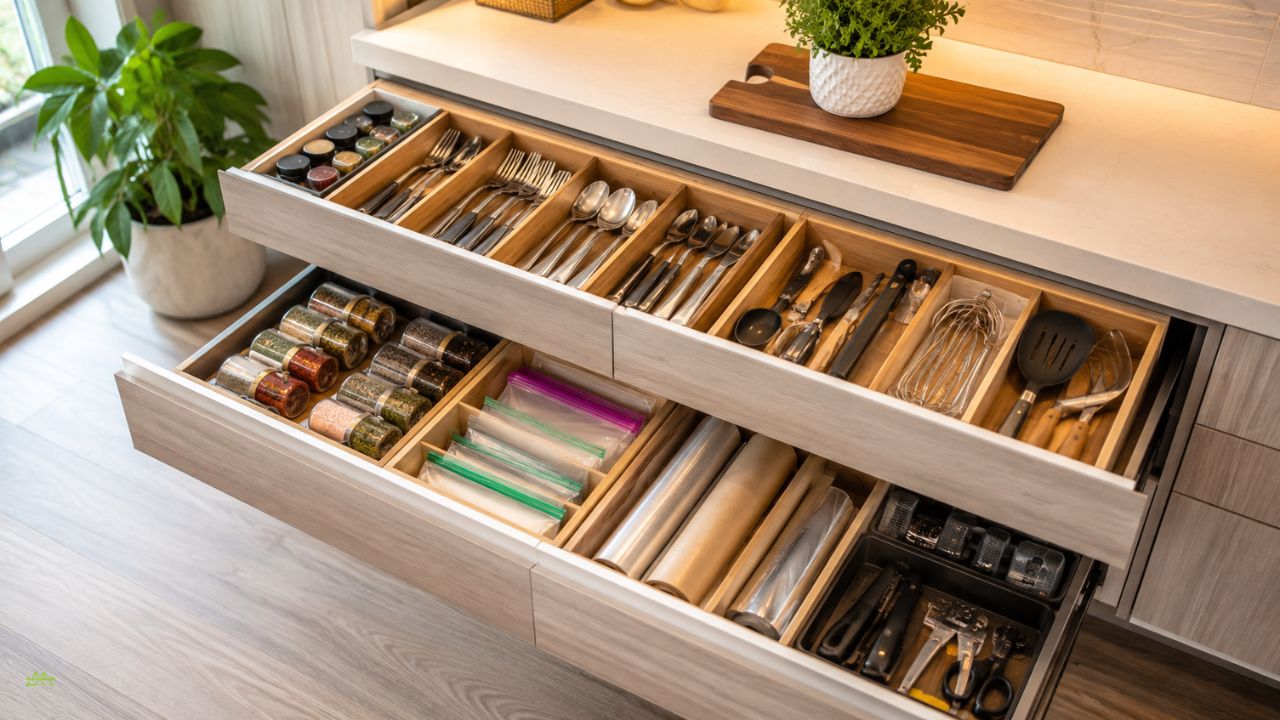
A messy kitchen drawer can turn even the simplest cooking task into a frustrating scavenger hunt. You open one drawer looking for a spatula and suddenly find tangled measuring spoons, expired condiment packets, and batteries that somehow migrated from another room. Learning how to organize kitchen drawers is one of the easiest ways to make your kitchen feel calmer, cleaner, and far more functional.
An organized drawer system saves time during meal prep, reduces stress, and helps you use your kitchen space more efficiently. Whether you have a tiny apartment kitchen or a large family cooking space, smart drawer organization creates a smoother daily routine.
The best part is that you do not need a full kitchen renovation to see a dramatic difference. With a few practical strategies, some thoughtful storage tools, and a clear system, you can transform chaotic drawers into organized spaces that actually stay tidy.
Why Kitchen Drawer Organization Matters
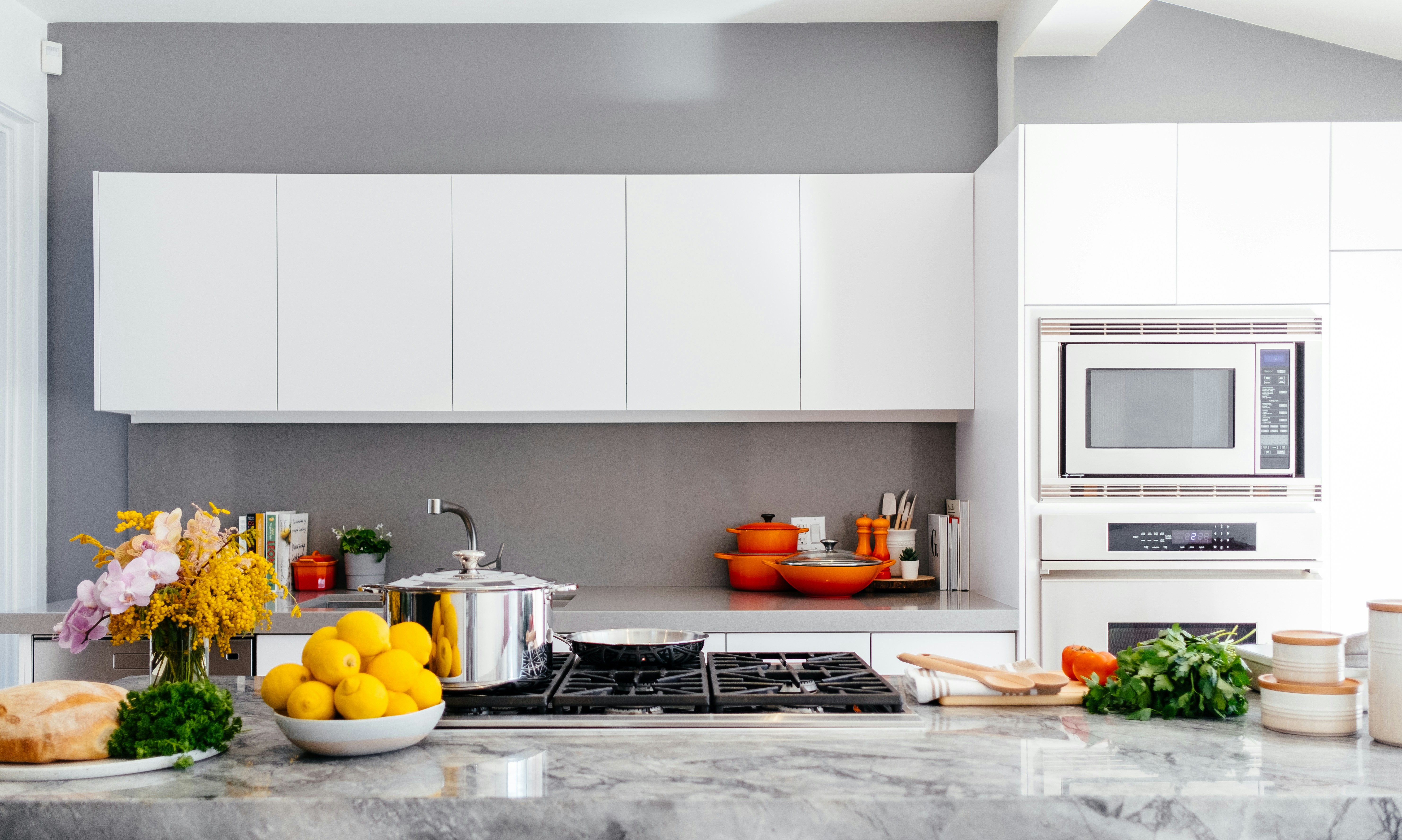
Kitchen drawers often become “catch-all” spaces because they are easy to hide clutter in. Unlike countertops, drawers stay closed most of the time, so it is tempting to toss random items inside and deal with the mess later.
The problem is that cluttered drawers create everyday frustration. You waste time searching for tools, buy duplicates because you cannot find what you already own, and struggle to keep your kitchen clean.
A well-organized drawer system helps you:
- Improve cooking efficiency
- Maximize kitchen storage
- Reduce countertop clutter
- Keep utensils sanitary and accessible
- Make cleaning easier
- Create a visually calming space
- Prevent junk accumulation
When you understand how to organize kitchen drawers, you create a kitchen that supports your routine instead of slowing it down.
Start With a Complete Drawer Clean-Out
Before buying organizers or rearranging anything, empty every kitchen drawer completely.
This step may feel overwhelming at first, but it is essential. Pulling everything out allows you to see exactly what you own and identify items that no longer belong in your kitchen.
Sort Items Into Categories
As you empty drawers, group similar items together. Categories may include:
- Cooking utensils
- Baking tools
- Cutlery
- Food storage supplies
- Measuring cups and spoons
- Kitchen gadgets
- Linens and towels
- Plastic wrap and foil
- Specialty cooking tools
Sorting helps you see how much space each category truly needs.
Remove Unnecessary Items
Many kitchens contain tools that are rarely used or completely forgotten. Be honest during this process.
Consider donating or discarding:
- Duplicate utensils
- Broken gadgets
- Expired kitchen products
- Single-purpose tools you never use
- Random non-kitchen items
The less clutter you keep, the easier it becomes to maintain organized drawers.

Measure Every Drawer Before Buying Organizers
One of the biggest mistakes people make is purchasing drawer organizers without measuring first.
Kitchen drawers vary widely in depth, width, and height. Taking accurate measurements prevents wasted money and ensures your organizers fit properly.
Important Measurements to Take
Measure:
- Drawer width
- Drawer depth
- Drawer height
- Interior usable space
Keep measurements saved on your phone while shopping.
Choose Flexible Organizers
Expandable drawer dividers and modular storage systems work especially well because they adapt to changing needs.
Popular organizer options include:
- Bamboo dividers
- Acrylic trays
- Adjustable inserts
- Stackable compartments
- Non-slip drawer liners
- Deep drawer bins
The goal is to create designated spaces so every item has a clear home.
How to Organize Kitchen Drawers by Zone
Instead of organizing randomly, create functional kitchen zones. This approach keeps related items near the area where they are most often used.
Cooking Zone
Store frequently used cooking utensils close to the stove.
Include items like:
- Spatulas
- Tongs
- Wooden spoons
- Whisks
- Ladles
- Thermometers
Use long compartments to prevent utensils from overlapping.
Prep Zone
Your prep area should contain tools used during food preparation.
Useful items for this zone include:
- Measuring spoons
- Measuring cups
- Peelers
- Graters
- Kitchen scissors
- Small mixing tools
Keeping prep tools together speeds up meal preparation significantly.
Baking Zone
If you bake regularly, dedicate a drawer specifically to baking essentials.
Organize:
- Pastry brushes
- Cookie cutters
- Decorating supplies
- Rolling pins
- Baking mats
- Offset spatulas
Separate small baking accessories into labeled containers for easier access.
Storage Zone
Food storage items can quickly become chaotic without a system.
Stack containers by size and store lids vertically whenever possible.
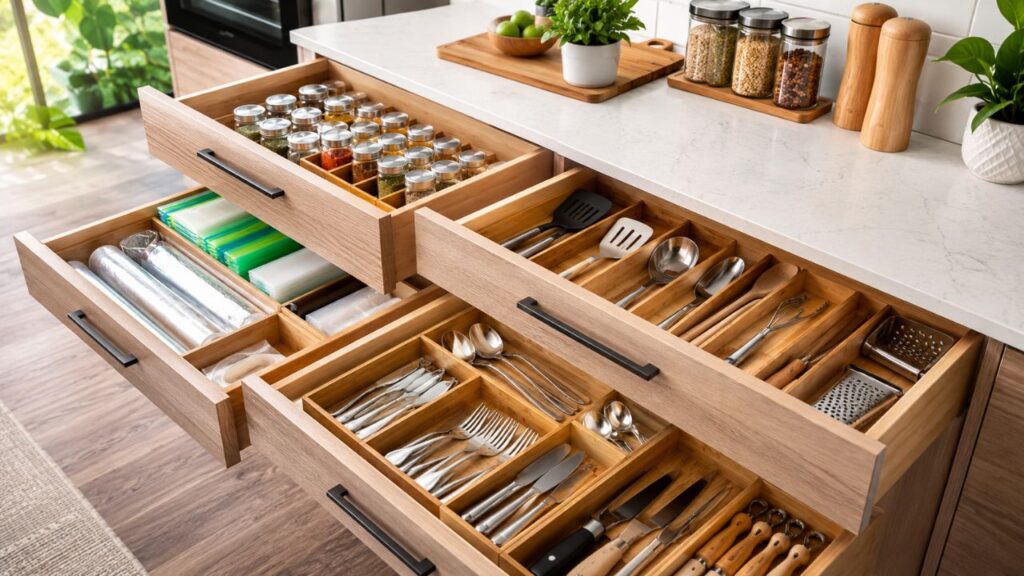
Drawer dividers work well for:
- Plastic wrap
- Aluminum foil
- Parchment paper
- Reusable bags
- Food clips
Best Tools for Organizing Kitchen Drawers
The right storage products make a huge difference in keeping drawers neat long-term.
Drawer Dividers
Adjustable dividers are among the most effective kitchen organization tools because they create customizable sections.
They work well for:
- Utensils
- Flatware
- Kitchen gadgets
- Cooking tools
Bamboo dividers are especially popular because they look stylish while remaining durable.
Non-Slip Drawer Liners
A non-slip liner prevents organizers and utensils from shifting every time the drawer opens.
It also protects drawers from scratches and crumbs.
Clear Storage Containers
Transparent containers help you quickly identify items without digging through clutter.
These are ideal for:
- Spice packets
- Snack accessories
- Small gadgets
- Baking decorations
Expandable Cutlery Trays
Expandable trays maximize space and create clean sections for forks, knives, spoons, and serving utensils.
They are especially useful in smaller kitchens where every inch matters.
Smart Solutions for Small Kitchen Drawers
Small kitchens require strategic organization because space is limited.
Fortunately, even tiny drawers can become highly functional with the right approach.
Prioritize Everyday Essentials
Only keep frequently used items in prime drawer space.
Rarely used gadgets should move to higher cabinets or storage containers elsewhere.
Use Vertical Space
Many people forget that drawers have height as well as width.
Stackable organizers, vertical lid holders, and tiered inserts help maximize every inch.
Avoid Overstuffing
Overfilled drawers are difficult to maintain and frustrating to use.
If drawers barely close, it is time to reduce inventory.
Create a Minimalist System
Minimalism works especially well in small kitchens.
Instead of storing five spatulas, keep the best two. Instead of multiple measuring cup sets, choose one reliable set.
A simplified kitchen naturally stays more organized.
Organizing Junk Drawers Without Losing Functionality
Almost every kitchen has a junk drawer. The key is preventing it from becoming a black hole of random clutter.
A functional junk drawer should contain only useful household essentials.
What Belongs in a Junk Drawer
Useful junk drawer items may include:
- Pens
- Sticky notes
- Batteries
- Tape
- Scissors
- Flashlights
- Rubber bands
- Small tools
Use Small Compartments
Tiny containers or mini dividers help separate miscellaneous items.
Without compartments, junk drawers quickly become messy again.
Remove Trash Regularly
Schedule a quick monthly clean-out to prevent clutter buildup.
The goal is controlled convenience, not hidden chaos.
How to Organize Kitchen Drawers for Families
Busy family kitchens need systems that are easy for everyone to follow.
The more intuitive the setup, the more likely family members are to maintain it.
Create Kid-Friendly Drawers
Place child-safe dishes, cups, and snacks in low drawers children can access independently.
This encourages responsibility while reducing kitchen traffic during busy times.
Label Compartments
Labels help family members return items to the correct location.
You can use:
- Chalkboard labels
- Printed labels
- Clear category markers
- Picture labels for children
Store Frequently Used Items Together
Keep lunch-making supplies in one area and breakfast tools in another.
Grouping related items simplifies busy morning routines.
Common Mistakes to Avoid
Even well-intentioned organization systems can fail if certain habits continue.
Keeping Too Many Gadgets
Single-purpose gadgets often consume valuable drawer space.
Before storing an item, ask yourself:
- Do I use this regularly?
- Does another tool already perform this function?
- Is it worth the storage space?
Ignoring Maintenance
Organization is not a one-time task.
Without regular upkeep, clutter slowly returns.
Take five minutes weekly to reset drawers and return misplaced items.
Using the Wrong Organizers
Oversized or poorly fitted organizers waste space instead of improving it.
Always match storage products to your specific drawer dimensions.
Mixing Categories
Combining unrelated items creates confusion and disorder.
Avoid storing office supplies with cooking tools or batteries with food accessories.
Seasonal Drawer Organization Tips
Kitchen needs often change throughout the year.
Rotating seasonal items helps free up everyday drawer space.
Store Holiday Tools Separately
Cookie cutters, holiday serving utensils, and specialty baking items do not need to stay in prime drawer locations year-round.
Place them in labeled storage bins during off-seasons.
Refresh Drawers Every Few Months
A seasonal reset helps you reassess what you truly use.
This is also a good time to:
- Replace damaged organizers
- Remove unused items
- Deep clean drawers
- Reevaluate kitchen zones
Consistent maintenance prevents clutter from becoming overwhelming again.
How to Maintain Organized Kitchen Drawers Long-Term
Learning how to organize kitchen drawers is only the beginning. Long-term success depends on simple daily habits.
Follow the One-In, One-Out Rule
When buying a new kitchen gadget, remove an older or unused item.
This prevents drawers from gradually becoming overcrowded.
Reset Drawers Weekly
Spend a few minutes each week returning misplaced items to their designated spots.
Small maintenance sessions are much easier than major reorganizations.
Teach Everyone the System
An organization system only works if everyone follows it.
Show family members where items belong and encourage consistency.
Keep Countertops Clear
Cluttered counters often lead to cluttered drawers.
Maintaining clean surfaces helps reinforce overall kitchen organization habits.
Budget-Friendly Kitchen Drawer Organization Ideas
You do not need expensive products to create an organized kitchen.
Many affordable solutions work just as well.
Repurpose Household Items
Creative storage alternatives include:
- Small boxes
- Mason jar lids
- Ice cube trays
- Recycled containers
- Desk organizers
These inexpensive options can separate small kitchen tools effectively.
Shop Dollar Stores
Dollar stores often carry surprisingly useful organizational products such as:
- Plastic bins
- Drawer trays
- Shelf liners
- Labels
- Storage baskets
DIY Drawer Dividers
Simple DIY dividers made from cardboard, wood, or foam board can create customized storage at a fraction of the cost.
Organizing Specialty Kitchen Drawers
Some kitchen drawers require more specialized systems.
Spice Drawers
Use angled spice inserts so labels remain visible.
Arrange spices alphabetically or by cooking frequency.
Knife Drawers
Knife blocks designed for drawers improve safety while saving counter space.
Avoid loose knives that can damage blades or create hazards.
Coffee and Tea Drawers
Create a beverage station drawer with:
- Coffee pods
- Tea bags
- Sweeteners
- Stir sticks
- Filters
This setup streamlines morning routines.
Baking Ingredient Drawers
If you bake frequently, shallow drawers can store:
- Measuring tools
- Decorating supplies
- Baking liners
- Piping accessories
Proper categorization keeps baking projects stress-free.
The Psychological Benefits of an Organized Kitchen
Kitchen organization affects more than physical space.
A clutter-free kitchen can also reduce mental stress.
Research consistently shows that organized environments improve focus, lower anxiety, and support productivity.
When drawers are tidy, cooking becomes more enjoyable and less chaotic.
Many people also notice healthier eating habits because meal preparation feels easier and more inviting.
Learning how to organize kitchen drawers is ultimately about creating a home environment that supports your lifestyle and daily routines.
FAQ
How often should kitchen drawers be reorganized?
Most kitchen drawers benefit from a quick reset weekly and a deeper reorganization every three to six months.
What is the best material for drawer organizers?
Bamboo, acrylic, and durable plastic are all excellent choices. Bamboo offers a stylish appearance, while acrylic provides visibility and easy cleaning.
How do I organize deep kitchen drawers?
Use stackable containers, vertical dividers, and compartment trays to maximize depth without creating clutter.
Should every drawer have a specific purpose?
Yes. Assigning a clear purpose to each drawer prevents random clutter accumulation and improves efficiency.
What should not be stored in kitchen drawers?
Avoid storing expired products, broken gadgets, duplicate tools, or items unrelated to kitchen tasks.
Are drawer liners necessary?
Drawer liners are highly recommended because they protect surfaces, reduce sliding, and simplify cleaning.
How can I keep my family organized?
Labels, clearly defined zones, and simple systems help family members maintain organization consistently.
What is the biggest mistake people make when organizing kitchen drawers?
The biggest mistake is trying to organize without decluttering first. Too many items make even the best systems ineffective.
Can small kitchens still have organized drawers?
Absolutely. Small kitchens often become more functional than large kitchens when storage is planned intentionally.
Conclusion
A well-organized kitchen is not about perfection. It is about creating systems that make everyday life easier, smoother, and less stressful. Once you understand how to organize kitchen drawers, even the busiest kitchen can become more efficient and enjoyable to use.
Start small, focus on functionality, and build habits that support long-term organization. Whether you are organizing a single utensil drawer or redesigning your entire kitchen storage system, thoughtful organization creates lasting benefits that extend far beyond appearance.
With the right approach, your kitchen drawers can finally work for you instead of against you.