
Introduction
Some rooms seem determined to challenge even the most creative homeowner. A long narrow living room layout is one of those design puzzles that can feel impossible at first glance. Furniture placement becomes tricky, traffic flow feels awkward, and the room can easily resemble a hallway rather than a welcoming living space.
The good news is that a difficult floor plan doesn’t have to limit your decorating potential. With thoughtful planning, the right furniture arrangement, and a few designer-approved techniques, a long narrow living room layout can become one of the most beautiful and functional spaces in your home.
Many modern apartments, townhouses, condos, and older homes feature elongated living rooms. While these spaces present unique challenges, they also offer opportunities to create multiple functional zones, add visual depth, and achieve a sophisticated look that feels intentional rather than forced.
This guide explores practical strategies, furniture arrangements, decorating tips, and design mistakes to avoid so you can make the most of your space.
Understanding the Challenges of a Long Narrow Living Room Layout
A narrow room often creates several design issues simultaneously.
Common challenges include:
- Limited furniture placement options
- Poor conversation areas
- Awkward traffic patterns
- Tunnel-like appearance
- Difficulty balancing proportions
- Lack of visual separation
The key is understanding that the room should not be treated as one long rectangle. Instead, it should be divided into purposeful zones that improve both function and aesthetics.
Why Room Proportions Matter
When a room is significantly longer than it is wide, furniture naturally gravitates toward the walls. Unfortunately, this often emphasizes the room’s narrowness.
Strategic furniture placement can visually widen the space while improving comfort and usability.
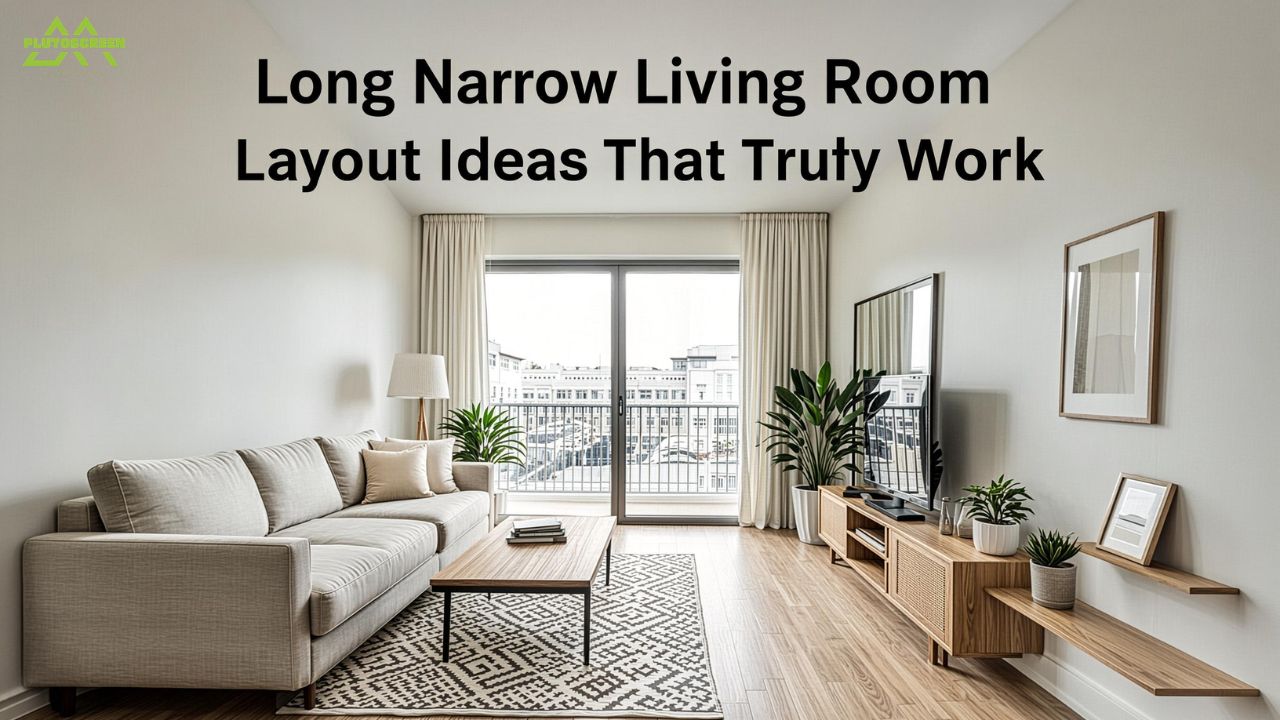
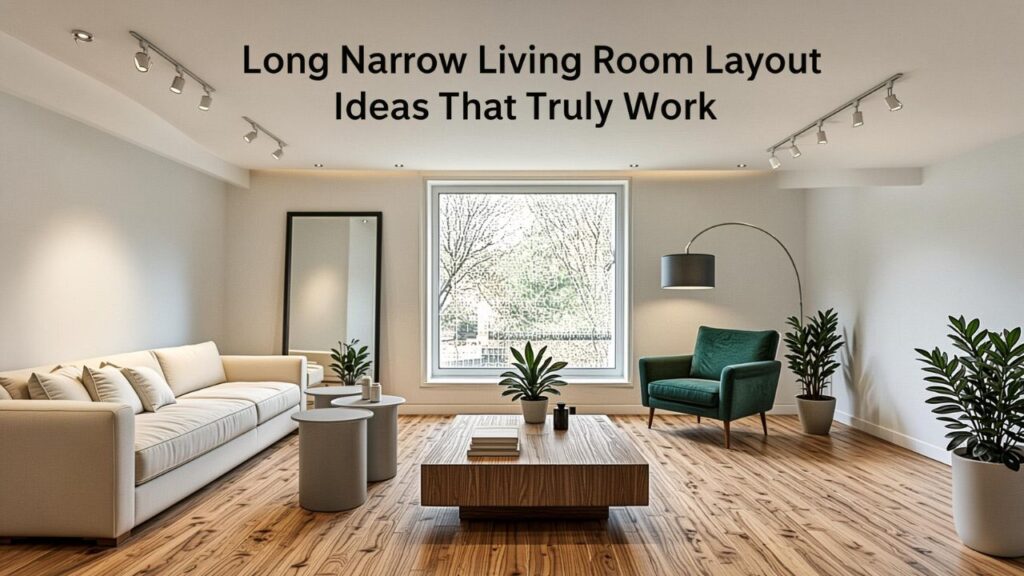
[Image: Designer-inspired long narrow living room featuring multiple functional zones and balanced furniture placement]
Creating Functional Zones
One of the most effective strategies for a long narrow living room layout is dividing the room into distinct areas.
Living Area Zone
The primary seating area should serve as the visual anchor.
Typically includes:
- Sofa
- Accent chairs
- Coffee table
- Area rug
Keep furniture grouped closely enough to encourage conversation.
Reading Corner
Unused corners can become cozy retreats.
Consider adding:
- Comfortable chair
- Floor lamp
- Side table
- Small bookshelf
This secondary zone adds functionality without overcrowding the room.
Home Office Area
Many homeowners use one end of a narrow room as a workspace.
A compact desk paired with wall-mounted storage can create a productive area while maintaining visual openness.
Choosing the Right Furniture
Scale Matters
Oversized furniture can overwhelm narrow spaces.
Instead, select pieces with:
- Slim profiles
- Raised legs
- Clean lines
- Moderate depth
These features help preserve visual breathing room.
Use Sectionals Carefully
A sectional can work beautifully in a long narrow living room layout, but size is critical.
Look for:
- Apartment-sized sectionals
- Low-profile designs
- Modular seating
Avoid sectionals that consume the entire width of the room.
[Image: Infographic showing ideal furniture arrangements for different narrow room dimensions]
Consider Floating Furniture
Many homeowners instinctively place furniture against walls.
In narrow rooms, floating furniture often works better.
Benefits include:
- Better traffic flow
- Defined seating areas
- Improved visual balance
- Enhanced room proportions
Even moving a sofa a few inches away from the wall can significantly improve the overall layout.
Best Sofa Placement Ideas
Perpendicular Placement
Positioning a sofa perpendicular to the longest wall can visually divide the room.
This technique:
- Creates zones
- Breaks up tunnel effects
- Improves conversation areas
Designers frequently use this strategy in challenging spaces.
Centered Seating Arrangement
Rather than hugging walls, center the furniture arrangement around an area rug.
This approach makes the room feel intentionally designed rather than constrained by its shape.
Facing Windows
When possible, orient seating toward windows.
Natural light becomes a focal point and helps expand the perceived width of the room.
Area Rugs: The Secret Design Tool
Area rugs perform more than decorative functions.
They:
- Define zones
- Anchor furniture
- Create visual structure
- Improve room balance
For a long narrow living room layout, choose rugs that fit the seating area rather than the entire room.
Rug Size Guidelines
Common recommendations include:
- Front legs on the rug
- All seating within the rug boundary
- Adequate walking space around edges
Avoid undersized rugs, which can make rooms feel fragmented.
Lighting Strategies for Narrow Spaces
Lighting dramatically affects how room proportions are perceived.
Layered Lighting
Combine:
- Floor lamps
- Table lamps
- Wall sconces
- Accent lighting
Multiple light sources reduce shadows and create depth.
Wall Sconces
Wall-mounted fixtures save valuable floor space while drawing attention upward.
This creates the illusion of greater width and height.
[Image: Modern narrow living room featuring layered lighting, wall sconces, and balanced décor]
Natural Light Enhancement
Maximize daylight by:
- Using sheer curtains
- Hanging mirrors strategically
- Choosing lighter wall colors
- Keeping windows unobstructed
Natural light prevents the room from feeling cramped.
Color Schemes That Expand the Room
Light Neutral Palettes
Colors that work particularly well include:
- Warm white
- Soft beige
- Light greige
- Pale taupe
- Cream
Lighter shades reflect more light and make walls appear farther apart.
Strategic Accent Colors
Accent colors add personality without overwhelming the room.
Popular options:
- Navy blue
- Sage green
- Charcoal
- Terracotta
- Dusty blue
Use accent colors sparingly for balance.
Consistent Color Flow
Maintaining consistent colors throughout the room helps create visual continuity and reduces the emphasis on awkward proportions.
Storage Solutions for Long Narrow Rooms
Vertical Storage
When floor space is limited, think vertically.
Options include:
- Floating shelves
- Built-in bookcases
- Wall cabinets
- Tall storage units
Multi-Functional Furniture
Choose pieces that perform multiple tasks.
Examples include:
- Storage ottomans
- Lift-top coffee tables
- Console tables with drawers
- Benches with hidden storage
This approach minimizes clutter while maximizing functionality.
Decorating Tips That Make a Difference
Use Mirrors Strategically
Mirrors help:
- Reflect light
- Create depth
- Expand visual width
Large mirrors positioned opposite windows can dramatically improve the room’s appearance.
Create Visual Breaks
Long walls can feel monotonous.
Break them up using:
- Artwork groupings
- Decorative panels
- Shelving displays
- Textural elements
Add Height
Vertical décor elements draw the eye upward.
Consider:
- Tall plants
- Floor-to-ceiling curtains
- Large artwork
- Statement lighting
These features improve room proportions.
Common Long Narrow Living Room Layout Mistakes
Pushing Everything Against Walls
This often exaggerates the room’s narrow shape.
Using Too Many Small Pieces
Excessive furniture creates visual clutter.
Blocking Traffic Flow
Always maintain clear pathways through the room.
Ignoring Scale
Furniture should match the room’s dimensions.
Pieces that are too large or too small disrupt balance.
Layout Examples for Different Room Types
Small Apartment Living Room
Recommended arrangement:
- Compact sofa
- One accent chair
- Round coffee table
- Floor lamp
Open Concept Space
Create separation with:
- Area rugs
- Console tables
- Lighting zones
Family Living Room
Include:
- Sectional seating
- Storage solutions
- Flexible furniture
- Durable materials
These elements support everyday use while maintaining style.
FAQ
What is the best furniture arrangement for a long narrow living room?
Creating distinct zones and floating furniture away from walls typically produces the best results.
Can a sectional work in a narrow living room?
Yes, provided the sectional is appropriately scaled for the room.
How do you make a narrow room look wider?
Use light colors, mirrors, layered lighting, and furniture arrangements that break up the room’s length.
Should furniture touch the walls?
Not necessarily. Floating furniture often improves room balance and traffic flow.
What shape coffee table works best?
Round and oval coffee tables generally work well because they soften long linear dimensions.
How many seating areas should a long room have?
Many elongated rooms benefit from two functional zones rather than a single large seating area.
What rug size is best?
Choose a rug large enough to anchor the primary seating arrangement.
Are dark colors bad for narrow rooms?
Not always. Strategic use of darker accents can add depth and sophistication.
Conclusion
A thoughtfully planned long narrow living room layout can feel every bit as stylish and comfortable as a perfectly proportioned room. By creating functional zones, choosing appropriately scaled furniture, incorporating layered lighting, and using visual techniques that balance proportions, you can transform an awkward floor plan into a beautiful and highly functional living space.
Instead of fighting the room’s shape, embrace its unique possibilities. With the right approach, a narrow living room can become one of the most inviting and versatile areas in your home.