
Introduction
A garage can quietly make or break the first impression of a home. A well-planned contemporary garage does more than hide the car; it adds curb appeal, supports daily routines, and can even make the entire property feel sharper, cleaner, and more valuable.
For years, garages were treated like leftover space. Tools piled up, old paint cans sat in corners, and the door was chosen almost as an afterthought. Today, that mindset feels outdated. Homeowners want garages that look refined from the street and work beautifully inside.
This matters because the garage is one of the hardest-working areas of the house. It may handle parking, storage, laundry overflow, hobbies, bikes, sports gear, workshop tools, deliveries, and now, for many households, EV charging. A design that looks good but fails in real life is not modern; it is just expensive decoration.
The good news is that you do not need a mansion, a three-car layout, or a huge renovation budget to create something impressive. With the right door style, lighting, flooring, ventilation, storage, and materials, even a modest garage can feel calm, organized, and surprisingly premium.
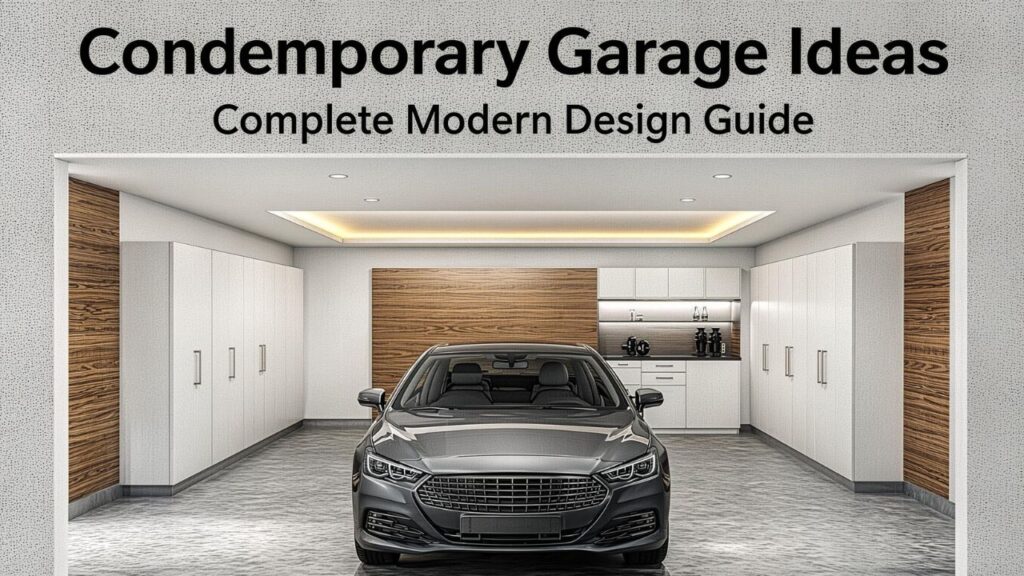
Table of Contents
- What Is a Contemporary Garage?
- Why Contemporary Garage Design Is Trending
- Exterior Design Ideas That Improve Curb Appeal
- Interior Layout, Storage, and Daily Function
- Materials, Flooring, Lighting, and Smart Features
- EV Charging, Safety, and Indoor Air Quality
- Financial Insights and Resale Value
- Contemporary Garage Design Checklist
- Common Mistakes to Avoid
- FAQs
- Conclusion
What Is a Contemporary Garage?
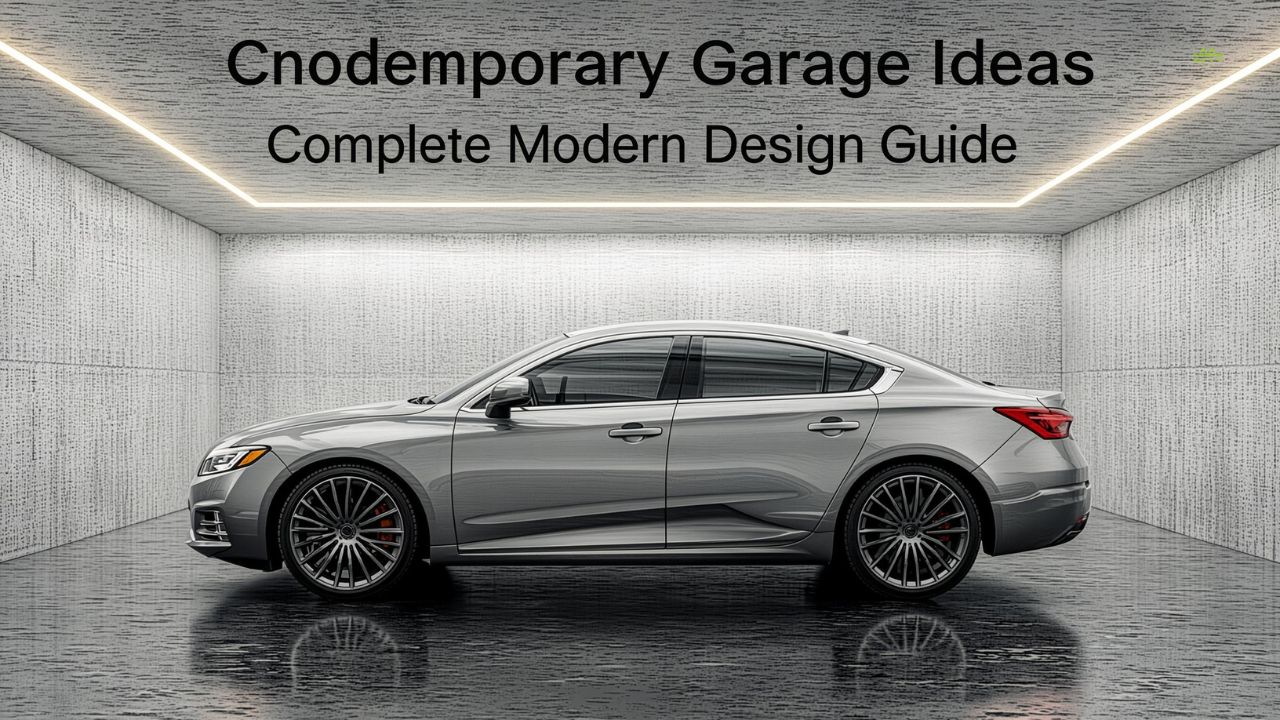
A contemporary garage is a garage designed around clean lines, practical function, modern materials, efficient lighting, organized storage, and a strong visual connection to the home’s architecture.
In simple words, it is not just “new-looking.” It feels intentional. The garage door works with the façade. The storage has a place. The lighting is bright without being harsh. The floor is durable. The whole space supports how people actually live.
A traditional garage often focuses on utility alone. A modernized version combines utility with design. Think flat-panel doors, frosted glass, matte finishes, concealed storage, neutral palettes, integrated technology, and better transitions between indoor and outdoor living.
contemporary garage design also tends to avoid cluttered ornamentation. Instead of busy trim, fake carriage details, or mismatched hardware, it leans into simplicity. That does not mean cold or boring. In reality, warm wood tones, textured concrete, architectural lighting, and soft landscaping can make the space feel welcoming.
Contemporary vs. Modern Garage Design
People often use “contemporary” and “modern” as if they mean exactly the same thing. They overlap, but there is a small difference.
Modern design usually refers to a specific design movement with roots in the early-to-mid 20th century. Contemporary design means current, evolving, and reflective of what feels fresh now. So, a modern garage might be minimalist and geometric, while a contemporary one may also include smart-home technology, EV readiness, sustainable materials, and flexible storage for today’s lifestyle.
That flexibility is important. A garage built for a family in 2026 may need to handle more than cars. It may need a wall-mounted bike system, charging station, compact home gym, mudroom cabinets, parcel shelf, freezer zone, tool wall, and seasonal storage.
The Core Design Principles
A strong design usually follows five principles:
- Simplicity: clean shapes, fewer visual distractions, and a calm color palette.
- Function: storage, access, lighting, and movement planned around real habits.
- Durability: materials that can handle dust, moisture, temperature swings, and impact.
- Efficiency: better insulation, smarter doors, LED lighting, and future-ready wiring.
- Curb appeal: a garage exterior that improves the look of the whole home.
When these ideas work together, the result feels effortless. You do not notice the design shouting at you. You simply feel that the space makes sense.
Why Contemporary Garage Design Is Trending
The garage has become more important because homes are working harder. Many people are renovating instead of moving, and they are asking every square foot to earn its place.
Home renovation activity has stayed strong in recent years. Houzz reported that 54% of homeowners took on renovation projects in 2024, and its 2026 renovation study coverage noted that activity remained steady in 2025, with median renovation spending holding at $20,000.
At the same time, buyers and homeowners are paying closer attention to efficiency, flexible living, technology, and curb appeal. Realtor.com’s 2025 trend research found fast-rising listing mentions for features such as EV charging, indoor-outdoor design, WaterSense fixtures, and net-zero-ready homes. EV charging mentions rose 91.6% year over year in its analysis.
That shift explains why the garage is no longer ignored. It is becoming a design opportunity, a storage solution, a technology zone, and a selling feature.
The Garage as a Lifestyle Space
A generation ago, many garages were dusty, dim, and slightly chaotic. You parked the car, grabbed a screwdriver, and tried not to trip over holiday decorations.
Now, the garage may be part workshop, part storage room, part charging hub, part home gym, and part entryway. For families, it is often the place where real life lands first: muddy shoes, backpacks, scooters, groceries, tools, sports kits, and Amazon boxes.
A contemporary garage responds to that reality. It does not pretend the space will stay empty and perfect. It plans for the mess before it happens.
Why Curb Appeal Starts at the Garage Door
On many homes, the garage door takes up a huge portion of the front elevation. If the door looks dated, dented, or visually heavy, the whole house can feel tired.
A clean garage door can change that quickly. Flat panels, slim windows, darker neutral finishes, natural wood-look materials, and quiet hardware can make the exterior feel more intentional. It is one of those changes neighbors notice even when they cannot explain exactly why the house suddenly looks better.
Exterior Design Ideas That Improve Curb Appeal
The outside of the garage should feel like part of the home, not a giant utility box attached to it. The goal is harmony.
Start with the door. A contemporary garage door usually has simple geometry. Flush panels, horizontal lines, vertical plank effects, glass sections, and smooth steel surfaces all work well when matched to the architecture.
Color matters too. Black, charcoal, taupe, warm gray, bronze, natural wood tones, and soft off-white are popular because they feel calm and architectural. However, the “right” color depends on your roof, siding, stone, brick, trim, and landscaping.
Garage Door Styles That Feel Current
Some garage door styles instantly make a home feel fresher:
- Flush-panel steel doors for a crisp minimalist look.
- Full-view aluminum and glass doors for a bold architectural statement.
- Wood-look composite doors for warmth without high maintenance.
- Slim-window doors for daylight and privacy.
- Vertical groove doors for a custom, high-end appearance.
- Matte black or bronze doors for contrast on light façades.
That said, do not choose a door from a photo alone. A full-view glass door may look stunning, but it may not suit every climate, privacy need, or security concern. A black door may feel dramatic, but in a very hot region, darker surfaces can absorb more heat.
Matching the Garage to the Home
The best exterior upgrades usually repeat something that already exists on the house. If your entry door has black hardware, the garage can echo that. If the home has warm cedar accents, a wood-look garage door may feel natural. If the windows have thin dark frames, slim garage door windows can create visual rhythm.
This is where many homeowners go wrong. They buy a beautiful door that belongs on a different house. The door itself is not bad, but the match feels awkward.
A safer approach is to choose two or three design cues from the home and repeat them quietly. That might mean matching trim color, copying window proportions, using similar metal finishes, or aligning the garage lighting style with the front porch fixtures.
Landscaping Around the Garage
Landscaping softens the hard edges of a driveway and garage. It can also make a plain elevation feel expensive without major construction.
Simple ideas include:
- Low grasses along the driveway edge.
- Tall planters between garage bays.
- Uplights near architectural columns.
- Climbing plants on a nearby trellis, not on the door.
- Gravel borders for texture.
- Small trees positioned away from foundations and overhead doors.
The trick is restraint. Too many plants can make the garage look crowded. Too few can make it feel harsh. A balanced design frames the garage without hiding it.
Interior Layout, Storage, and Daily Function
A beautiful exterior is only half the story. Inside, the garage needs to work.
Before buying shelves or cabinets, watch how your household uses the space for one week. Where do shoes land? Where do tools end up? Which items are used daily, monthly, or once a year? Which corner always becomes a dumping ground?
A contemporary garage interior should reduce friction. The bike should be easy to grab. The recycling should be near the exit. The charger should be near the parking spot. The tools should not require a treasure hunt.
Smart Storage Zones
The simplest way to organize a garage is by zones:
| Zone | Best For | Design Tip |
|---|---|---|
| Daily access | Shoes, bags, pet supplies, sports gear | Use open cubbies or labeled bins near the house entry |
| Vehicle zone | Parking, EV charging, cleaning supplies | Keep walls clear enough for doors to open safely |
| Workshop zone | Tools, workbench, hardware | Add task lighting and pegboard or slatwall |
| Seasonal zone | Holiday décor, camping gear, luggage | Use overhead racks or high cabinets |
| Outdoor zone | Garden tools, hoses, lawn equipment | Keep near the garage door for quick access |
| Utility zone | Freezer, laundry overflow, mechanical equipment | Allow ventilation and service clearance |
| This zoning method sounds simple, but it changes everything. Once each item has a logical home, the garage stops becoming a storage swamp. |
Cabinets, Slatwall, and Overhead Storage
Closed cabinets create a clean look, especially when the garage is visible from the driveway. Slatwall is useful for tools, bikes, helmets, and flexible hooks. Overhead racks are great for bulky seasonal items, but they must be installed properly and loaded safely.
For a high-end feel, choose storage in a limited color palette. White, gray, black, natural wood, and matte metal finishes usually work best. Bright plastic bins can still be useful, but hiding them behind cabinet doors makes the room feel calmer.
Space Planning for Real Cars
One common mistake is designing a garage that looks perfect empty but fails once a vehicle is parked.
Measure carefully:
- Vehicle length and width.
- Door swing clearance.
- Walking space around the car.
- Storage depth along each wall.
- Garage door track and opener position.
- Ceiling height for overhead racks.
- Charger cable reach if you own or plan to own an EV.
A garage should not make you squeeze sideways every morning with coffee in one hand and a laptop bag in the other. Comfort is part of design.
Materials, Flooring, Lighting, and Smart Features
Materials decide whether a garage looks good for one month or ten years. Garages face tire marks, dust, moisture, dropped tools, heat, cold, pests, and sometimes water.
For flooring, polished concrete, epoxy coatings, polyaspartic coatings, modular tiles, and sealed concrete are common choices. Each has pros and cons.
| Flooring Type | Strengths | Watch Out For |
|---|---|---|
| Sealed concrete | Affordable, simple, clean look | May stain if not maintained |
| Epoxy coating | Durable, glossy, customizable | Surface prep is critical |
| Polyaspartic coating | Fast curing, strong finish | Usually costs more |
| Interlocking tiles | Easy to replace, many patterns | Can trap dirt underneath |
| Polished concrete | Sleek, architectural feel | May be slippery if finished poorly |
| The right floor depends on budget, climate, use, and installation quality. A workshop garage needs different durability than a display-style garage used mostly for parking. |
Lighting That Changes the Mood
Bad lighting makes a garage feel gloomy and unsafe. Good lighting makes it feel larger, cleaner, and easier to use.
Use layers:
- Bright overhead LED fixtures for general visibility.
- Task lighting above a workbench.
- Motion sensors near entry points.
- Wall lights outside the garage door.
- Low-glare lighting if the garage doubles as a gym or hobby space.
A contemporary garage benefits from lighting that is practical but not clinical. Warm exterior lights can make the home feel welcoming at night, while neutral indoor LEDs help with accuracy when working on tools, paint, or equipment.
Smart Garage Features
Smart features can be genuinely useful when they solve real problems.
Consider:
- Smart garage door openers with phone alerts.
- Keypad or app-controlled access.
- Security cameras facing the driveway.
- Leak sensors near appliances or utility areas.
- Smart lighting schedules.
- Battery backup for the opener.
- Temperature and humidity monitoring.
However, do not overcomplicate the space. Technology should make the garage easier to manage, not turn it into a confusing control room.
EV Charging, Safety, and Indoor Air Quality
The garage is becoming the natural place for home EV charging. The U.S. Department of Energy’s Alternative Fuels Data Center explains that many EV owners can meet daily driving needs with overnight Level 1 charging when a suitable dedicated outlet is available, while Level 2 charging may be better for longer commutes, irregular schedules, or larger batteries.
The International Energy Agency also expects home charging to remain a major part of EV infrastructure growth. In its Global EV Outlook 2025, the IEA said around 150 million charging points are added from 2025 to 2030 in its stated policies scenario, with almost two-thirds being home chargers.
That does not mean every homeowner needs to install a charger today. But a future-ready garage should at least consider electrical capacity, panel location, conduit paths, parking position, and safe cable management.
Planning an EV-Ready Garage
Before installing charging equipment, speak with a qualified electrician. Important questions include:
- Does the electrical panel have enough capacity?
- Is the circuit dedicated and code-compliant?
- Where will the vehicle park most often?
- Can the cable reach without crossing a walkway?
- Is the charger protected from impact?
- Will charging equipment be indoors or exposed to weather?
- Are permits or inspections required locally?
This is one area where DIY guessing can become risky. Electrical work should be safe, permitted where required, and installed to local standards.
Attached Garage Air Quality
If the garage is attached to the home, air quality deserves attention. The EPA identifies automobile emissions in attached garages as one indoor source of benzene, along with stored fuels and paint supplies.
EPA retrofit guidance also recommends air sealing walls and ceilings that separate attached garages from living spaces, including attention to doors, weatherstripping, and penetrations for electrical, plumbing, or ducts.
Practical steps include:
- Never run a car engine in a closed garage.
- Store fuels, solvents, and paints safely.
- Keep the house-to-garage door weatherstripped.
- Seal visible gaps and penetrations.
- Use proper ventilation when working with chemicals.
- Install carbon monoxide alarms where recommended by local code and safety guidance.
A stylish garage should never come at the expense of health. Clean design and safer air can absolutely work together.
Financial Insights and Resale Value
Because “contemporary garage” is a design concept rather than a person, personal background, career journey, achievements, and net worth do not apply in the celebrity or biography sense. What does apply is the financial background of the trend: why homeowners are investing in garages, how the category has evolved, and where the return may come from.
The garage’s “career journey,” so to speak, has been fascinating. It began as a practical shelter for vehicles, became a household storage catch-all, and is now turning into a flexible extension of the home. Its achievements are visible in buyer interest, curb appeal impact, storage value, and technology readiness.
The financial case can be strong, especially when the project improves the garage door and front elevation. The 2025 JLC Cost vs. Value Report listed garage door replacement at a national average job cost of $4,672, resale value of $12,507, and cost recouped of 268%.
That figure does not mean every garage project automatically returns more than it costs. Markets differ. Materials differ. Installation quality differs. A luxury garage makeover with custom cabinetry and specialty flooring may be wonderful for daily life, but it may not produce the same resale percentage as a highly visible door replacement.
Where the Money Usually Makes Sense
The best-value garage investments tend to improve visibility, function, or future readiness:
- Replacing a damaged or dated garage door.
- Adding better exterior lighting.
- Improving storage so the home feels larger.
- Upgrading flooring if the surface is cracked or stained.
- Adding safe electrical planning for EV charging.
- Improving insulation and weather sealing.
- Creating a cleaner entry zone from garage to house.
The emotional return matters too. If the garage is the entrance you use every day, a better layout can genuinely reduce stress. That may not show up on an appraisal, but it affects daily life.
Where Costs Can Get Out of Hand
Garage projects become expensive when scope creeps. A simple door replacement turns into new siding. New cabinets reveal the need for electrical outlets. A floor coating requires concrete repairs. A charger installation needs a panel upgrade.
This does not mean you should avoid upgrades. It means you should budget honestly. Get written quotes, compare specifications, and leave room for surprises.
Contemporary Garage Design Checklist
Use this checklist before starting a project:
| Decision Area | Questions to Ask | Best Outcome |
|---|---|---|
| Door style | Does it match the house? Is it insulated? | Strong curb appeal and better comfort |
| Storage | What needs daily vs. seasonal access? | Less clutter and faster routines |
| Flooring | Will it handle moisture, tires, and tools? | Durable, easy-to-clean surface |
| Lighting | Is it bright enough inside and attractive outside? | Safer, more usable garage |
| Electrical | Do you need outlets, tools, freezer, or EV charging? | Future-ready planning |
| Ventilation | Are fumes, heat, or humidity an issue? | Healthier and more comfortable space |
| Security | Are tools, bikes, and vehicles protected? | Better peace of mind |
| Budget | What is essential and what is optional? | Fewer regrets and surprises |
A Real-Life Example
Imagine a family with a two-car garage that technically has enough space, but only one car fits because the walls are packed with boxes, bikes, and half-used paint cans. The garage door is beige, dented, and loud. At night, the driveway feels dark.
Instead of doing a flashy remodel, they make focused changes. They replace the door with a smooth charcoal insulated model, add two warm exterior sconces, install slatwall for bikes and tools, paint the interior walls white, seal the concrete floor, and create labeled overhead storage for seasonal bins.
The result is not dramatic in a reality-TV way. It is better than that. The garage becomes calmer, safer, easier to use, and nicer to come home to. That is the quiet power of contemporary design.
Common Mistakes to Avoid
The first mistake is choosing style before function. A gorgeous garage that cannot hold your real belongings will fail quickly.
The second mistake is ignoring the home’s architecture. A sleek glass door may look odd on a rustic cottage. A heavy carriage-style door may fight against a minimalist home. Good design feels connected.
The third mistake is underestimating lighting. Many homeowners spend thousands on cabinets but leave one weak bulb overhead. Lighting affects safety, mood, cleanliness, and usability.
The fourth mistake is forgetting ventilation and air sealing, especially in attached garages. A clean-looking space still needs to manage fumes, moisture, dust, and temperature.
The fifth mistake is buying storage before decluttering. If you organize items you do not need, you are just giving clutter a nicer address.
Design Choices That Age Well
Some choices are more timeless than others:
- Simple panel garage doors.
- Neutral colors with one warm accent.
- Durable flooring in gray, concrete, or stone-like tones.
- Integrated storage instead of random shelving.
- Good exterior lighting.
- Natural materials used sparingly.
- Flexible wall systems that can change with your needs.
The safest design is not the plainest one. It is the one that can still look calm and useful five or ten years from now.
FAQs
What makes a garage contemporary?
A garage feels contemporary when it combines clean design, modern materials, smart storage, efficient lighting, and practical technology. It should look current while still working well for everyday life.
What is the best door style for a contemporary garage?
Flush-panel, full-view glass, slim-window, matte steel, and wood-look composite doors are popular choices. The best option depends on your home’s architecture, climate, privacy needs, and budget.
Is a contemporary garage expensive to create?
It can be, but it does not have to be. A new door, better lighting, wall storage, and a cleaner floor can make a major difference without a full rebuild.
Does a garage door replacement improve resale value?
It can. The 2025 JLC Cost vs. Value Report listed garage door replacement as a high-return project, with a national average cost recouped figure of 268%. Actual results vary by market and project quality.
Should I add EV charging to my garage?
If you own an EV or plan to buy one, it is worth exploring. The DOE notes that Level 1 may work for many daily driving needs, while Level 2 can suit longer commutes or larger batteries. Always consult a qualified electrician.
What flooring is best for a modern garage?
Epoxy, polyaspartic coatings, sealed concrete, polished concrete, and interlocking tiles are common options. The best choice depends on budget, durability needs, moisture, and how the garage is used.
How do I make a small garage feel bigger?
Use wall-mounted storage, overhead racks, bright lighting, light wall colors, slim cabinets, and a clean floor. Avoid bulky freestanding shelves if they block walking paths or car doors.
Can a garage be both stylish and practical?
Yes. The strongest designs are both. A beautiful garage should still support parking, storage, safety, cleaning, maintenance, and daily movement without frustration.
What color works best for a contemporary garage door?
Charcoal, black, bronze, warm gray, taupe, off-white, and natural wood tones often work well. Choose a color that relates to the roof, trim, windows, front door, and exterior materials.
Conclusion
A garage is no longer just the place where clutter goes to disappear. It is part of the home’s architecture, part of the daily routine, and often one of the first things people notice from the street.
A thoughtful contemporary garage balances beauty with usefulness. It has a door that suits the home, storage that supports real life, lighting that feels safe and welcoming, flooring that can take abuse, and technology that makes sense instead of showing off.
Start with the problems you feel every day. Maybe the driveway looks dull. Maybe the garage is too dark. Maybe tools are scattered everywhere. Maybe you want EV readiness, better security, or a cleaner entry into the house. Once the problem is clear, design decisions become easier.
The best garage upgrade is not always the most expensive one. It is the one that makes your home feel more organized, more attractive, and more comfortable to live in. When design and function finally meet, even a once-forgotten garage can become one of the smartest spaces in the house.